AI Trends
The Agentic Shopping Revolution: How AI Personal Shopping Assistants Are Redefining E-Commerce in 2026
9 min read
AI personal shopping assistants now decode intent, power virtual try-ons, automate predictive reordering, and run on-device for privacy. Here's how agentic commerce is reshaping UK e-commerce in 2026.
✦Key Takeaways
- AI agents now decode shopping intent rather than keywords, turning vague desires into precise actions.
- Virtual try-on technology powered by AR and generative AI can slash return rates by up to 25%, boosting buyer confidence overnight.
- Predictive AI handles 'life admin' shopping — reordering essentials without you lifting a finger.
- On-device AI personal shopping assistants protect privacy while delivering personalised experiences, making 2026 the year of sovereign, private commerce.
- Businesses embracing agentic commerce are positioned to capture a slice of a market projected to reach $190 billion+ in the US alone by 2030.
Imagine never typing "winter jacket" into a search bar again. Instead, your phone quietly notices your old coat is thinning at the elbows, checks the forecast, and suggests three perfect replacements — each already filtered for your size, style preferences, and budget. Welcome to agentic commerce, where AI personal shopping assistants don't just respond to commands. They act on your behalf.
In 2026, e-commerce is no longer about browsing endless pages. It's about intelligent agents that anticipate needs, visualise options, and even complete routine purchases autonomously. For forward-thinking consumers, this means less time shopping and more time living. For digital business owners, it means higher conversions, lower returns, and deeper customer loyalty.
From Search to Intent: The Rise of the AI Personal Shopping Assistant
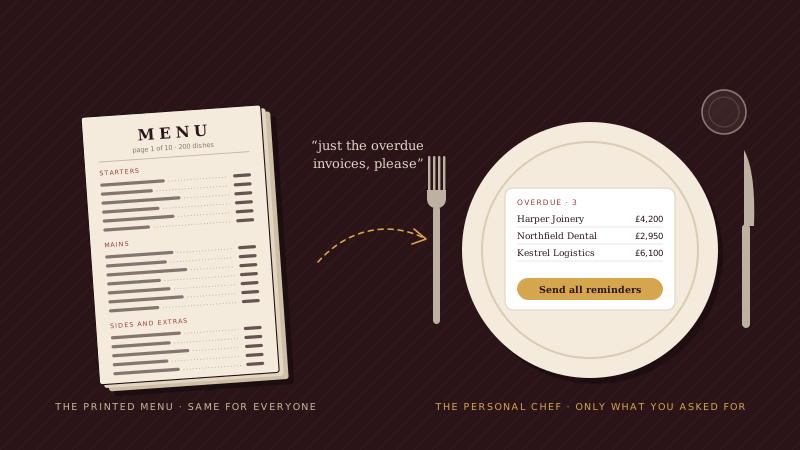
Traditional e-commerce relied on keywords. You typed what you wanted; the engine showed what matched. Agentic commerce flips the script — AI agents now understand why you shop. They analyse your past purchases, calendar events, even weather data and social context. Need a gift for a colleague's baby shower next week? The agent doesn't just suggest blankets — it cross-references your friend's registry, your ethical preferences, and current promotions, then drafts a message to confirm delivery.
This shift benefits everyone. Consumers save hours of decision fatigue. Digital business owners see cart abandonment drop because recommendations feel personal, not pushy. Early adopters report 30–40% higher engagement when AI moves from reactive search to proactive intent. As we explored in our earlier analysis of domain-specific AI and competitive moats, the real power comes when these agents are tuned to your unique habits rather than generic data. The result? Shopping that feels like having a thoughtful personal assistant who never sleeps.
Virtual Try-Ons: Seeing Is Believing (and Buying)
One of the biggest friction points in online shopping has always been uncertainty: "Will this fit? Does the colour look right on me?" Virtual try-on technology solves that with stunning accuracy. Using augmented reality (AR) and generative AI, you upload a quick selfie or body scan and instantly see clothes, glasses, or even furniture in your space. Google's "Shop with AI Mode" now lets users try outfits on their own photos with diffusion models that understand fabric drape, lighting, and body movement.
The impact on return rates is dramatic. Studies show virtual try-on technology can reduce returns by up to 25% by setting accurate expectations before purchase. Fewer returns mean happier customers and healthier margins for retailers.
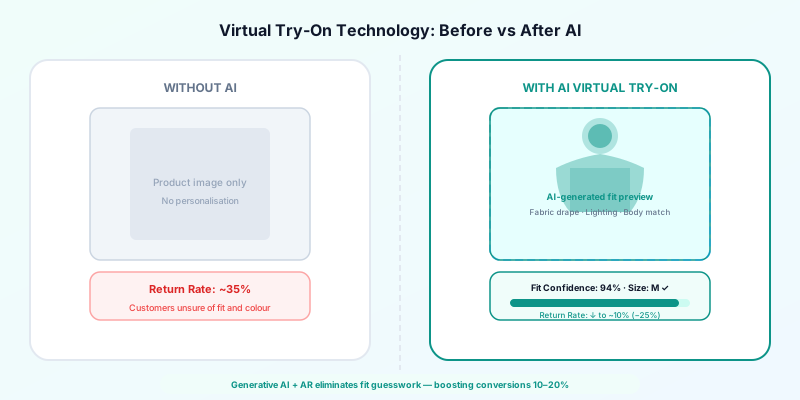
For digital business owners, integrating these tools is a genuine competitive edge. Brands using generative visual modelling see conversion lifts of 10–20% because shoppers feel confident clicking "buy." If you're exploring which AI tools fit your e-commerce stack, our guide to the top 10 free AI tools for UK SMEs in 2026 covers accessible options that can sit alongside your existing storefront. No more guessing games — just instant visualisation that turns browsers into buyers.
Predictive Life Admin: AI That Reorders Essentials Autonomously
Forget remembering to buy toothpaste or coffee filters. In 2026, your AI personal shopping assistant quietly tracks household inventory and usage patterns, then reorders before you run out. These predictive systems learn your routines: how quickly your family goes through milk, which brand of detergent causes fewer skin irritations, even seasonal adjustments for allergy medication. With permission, they check your smart fridge, pantry cameras, or subscription history and place recurring orders at the best price.
The beauty is in the autonomy without overreach. You set guardrails — "never spend more than £50/month on snacks" or "only eco-friendly options" — and the agent handles the rest. Consumers report reclaiming entire weekends previously lost to errands. Business owners benefit from predictable, high-margin repeat revenue and stronger lifetime customer value. For e-commerce teams already running Shopify or similar stacks, the infrastructure for this kind of agentic replenishment is closer than you think — our deep-dive on building AI agents on your existing Shopify and CRM stack shows how to implement autonomous order flows without replacing a single system.
Privacy & Local AI: Why 2026 Is the Year of On-Device Shopping Assistants
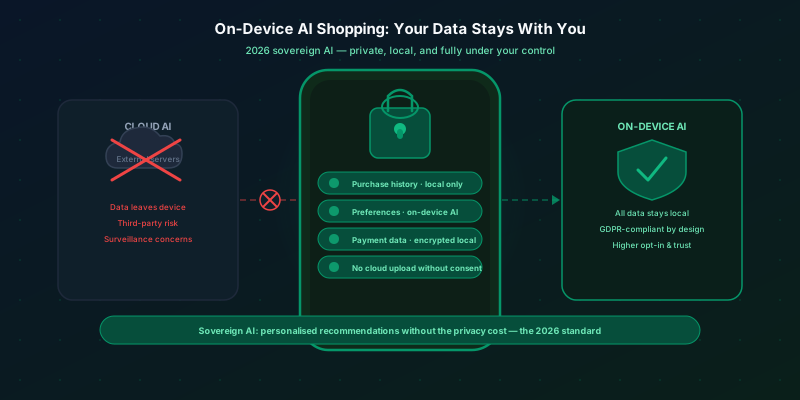
As powerful as cloud-based AI is, many shoppers worry about data sharing. That's why on-device and sovereign AI are exploding in popularity. In 2026, your shopping assistant can run locally on your phone or home hub, keeping sensitive purchase history, preferences, and even payment details private. No more data leaving your device unless you explicitly approve it. This aligns perfectly with evolving data privacy laws — including the ongoing international debate around data sovereignty and new AI and privacy legislation in 2026 — and growing consumer demand for control.
Tech leaders are calling this the era of sovereign AI — AI that belongs to you, not the platform. For consumers, it means personalised recommendations without the creepy feeling of being watched. For digital business owners, it builds trust — leading to higher opt-in rates and long-term loyalty. 2026 e-commerce trends clearly favour privacy-first solutions that deliver powerful results without compromising security.
The Road Ahead: Embracing Agentic Commerce Today
The agentic shopping revolution isn't coming — it's already here. From intent-driven discovery to virtual try-ons, predictive reordering, and private on-device agents, AI is making shopping effortless, enjoyable, and secure.
Businesses that adopt these tools early will lead the pack. Consumers who embrace AI personal shopping assistants will wonder how they ever shopped any other way. The technology is ready. The question is: are you? The agentic shopping revolution is redefining convenience, confidence, and control — visit our AI services page to explore how we help UK e-commerce businesses implement these capabilities today.
Frequently Asked Questions
- What exactly is agentic commerce?
- Agentic commerce refers to AI systems that don't just recommend products but take autonomous actions on your behalf — understanding intent, comparing options, and completing purchases within your predefined guidelines.
- How do virtual try-on tools actually reduce returns?
- By letting you visualise fit, colour, and scale in real time using your own photo or 3D model, they eliminate guesswork. Retailers using the technology have seen return rates drop by up to 25%.
- Is predictive reordering safe and private?
- When built with on-device AI, yes. You control the rules, and data never leaves your device unless you choose to share it for better deals or integrations.
- Will AI shopping assistants replace human decision-making?
- No. They handle the boring, repetitive parts so you can focus on the fun, high-stakes choices — like picking a special-occasion outfit or planning a dream holiday.
- How can small e-commerce businesses start implementing these trends in 2026?
- Begin with simple integrations like Google's Shop with AI Mode tools or on-device recommendation engines. Focus on one high-friction area — returns or repeat purchases — and scale from there.