Case Deep-Dive
AI UGC Creatives vs Traditional Shoots: A London Fashion Case Study
13 min read
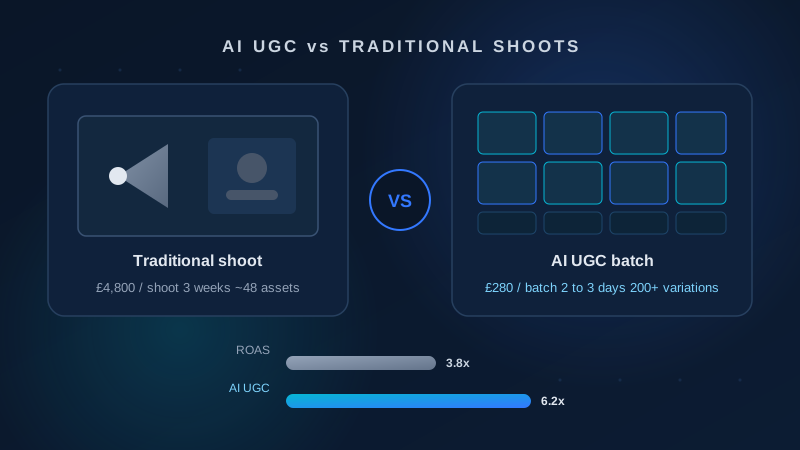
We ran a controlled four-week test for a London fashion e-commerce client: a professional studio shoot against AI generated UGC style creatives, on identical £15,000 ad budgets. The AI UGC creatives won on every metric, from a 6.2x ROAS to a 40% lower cost per purchase. Here is the full breakdown, the 2026 tool stack, and the balanced approach we now recommend.
✦Key Takeaways
- On identical £15,000 budgets across Meta and TikTok, AI UGC style creatives beat a traditional studio shoot on every metric: CTR, conversion rate, ROAS, engagement and cost per purchase.
- The headline numbers were a 6.2x ROAS against 3.8x, and cost per purchase down from £48 to £29, a 40% reduction on the same spend.
- AI UGC won mainly because it looks native to the feed, and because volume, 200-plus variations against 48 studio assets, turned creative testing into a system rather than a gamble.
- Annualised, the AI route cost £4,000 to £6,000 against £55,000-plus for traditional, a saving of roughly 88 to 90 percent, with no reshoots needed for seasonal drops.
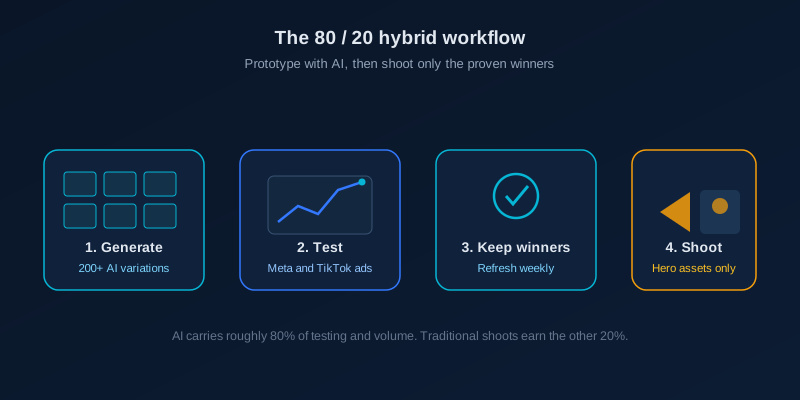
- Pure AI is not the answer. The winning formula is a blend: AI for about 80% of testing and volume content, traditional shoots for hero assets and high-trust brand moments.
- Human oversight is the real product. Prompting, brand voice and quality control are what separate content that performs from AI slop.
- UK brands must keep AI UGC inside ASA rules: stylised lifestyle content is fine, fabricated testimonials and fake endorsements are not.
In 2026, the question for any consumer brand running paid social is no longer whether to use AI for content. That debate is settled. The real question is how aggressively you should lean into AI generated UGC style creatives versus the expensive, slow, beautifully lit traditional photoshoot you have always relied on.
We wanted a real answer rather than another confident opinion, so we ran a controlled head-to-head test with one of our London based e-commerce clients: a mid-sized, direct-to-consumer fashion brand selling sustainable activewear. Same products, same audiences, same budget. One set of creatives came from a professional studio shoot. The other came from a stack of AI tools producing user generated content style assets. Then we let the ad platforms decide.
What follows is the actual setup, the actual numbers, and the playbook we now use across clients. Some of it confirmed what we expected. One result genuinely surprised us, and it is the reason we no longer recommend pure AI or pure traditional to anyone.
The Test: One Brand, Two Creative Engines
Our client is a sustainable activewear label that sells direct to consumers, mostly through Meta and TikTok. Their margins are healthy but not generous, their audience is young, urban and sceptical of anything that looks like a glossy advert, and their range refreshes several times a year. In other words, a near perfect candidate for testing whether AI UGC can carry real commercial weight rather than just looking clever in a deck.
We built two creative engines and ran them against each other over four weeks, with an identical £15,000 of ad spend behind each. The products promoted, the landing pages, the audiences and the optimisation goal were all held constant. The only variable that changed was where the creative came from.
A fair test needs caveats, and this one has them. It was a single brand in a single category over four weeks, so treat the exact percentages as directional rather than universal law. We relied on each platform's own attribution, held the optimisation event constant, and ran both engines at the same time rather than back to back, so seasonality and audience mood hit them equally. What we are confident about is the direction of the result and the scale of the gap, not the second decimal place.
The Traditional Route
The traditional route was a full professional shoot in a studio in East London: models, a photographer, a videographer, a stylist, and a post-production edit afterwards. It is the process most fashion brands still treat as the default, and it produces genuinely beautiful work.
The economics, though, are unforgiving. The shoot cost £4,800 once talent fees, studio hire, travel and editing were totalled up. It took three weeks from the initial brief to final delivered assets. The output was around 40 high quality images and 8 videos: polished, on brand, and ready for the website.
The AI UGC Route
The AI UGC route used a stack of generative tools to produce realistic, user generated style content: everyday looking people, natural lighting, relatable scenarios, and the slightly unpolished, authentic feel that performs in social feeds. The brief was almost the opposite of the studio one. We were not chasing perfection. We wanted content that looked like a real customer had filmed it on their phone in a Hackney park.
The cost was £280 per batch, covering the tools plus light human editing. Turnaround was two to three days. The output is the part that changes the game: more than 200 variations across different models, settings, camera angles and opening hooks, against the studio's 48 assets. We were not comparing 48 polished assets with 48 AI ones. We were comparing 48 with 200-plus.
The Head-to-Head Results
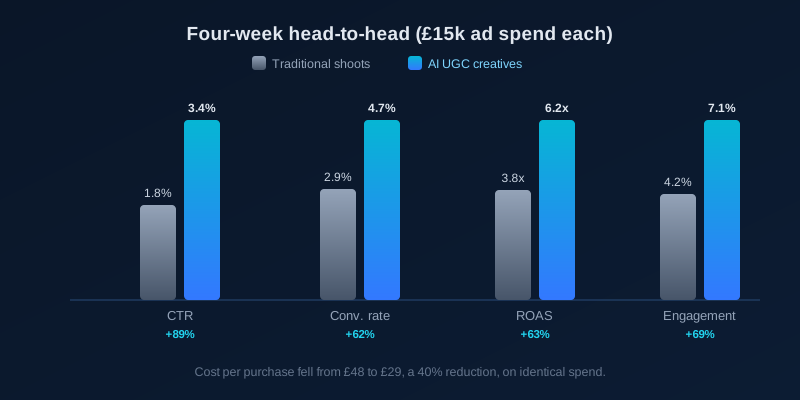
After four weeks of equal spend across Meta and TikTok, the gap was not subtle. The AI UGC creatives won on every single metric we cared about, and on most of them the margin was large enough to change how a brand should budget.
| Metric | Traditional shoots | AI UGC creatives | Winner and lift |
|---|---|---|---|
| CTR | 1.8% | 3.4% | AI, +89% |
| Conversion rate | 2.9% | 4.7% | AI, +62% |
| Cost per purchase | £48 | £29 | AI, -40% |
| ROAS | 3.8x | 6.2x | AI, +63% |
| Engagement rate | 4.2% | 7.1% | AI, +69% |
Read the cost per purchase line again, because that is the one that pays the bills. Identical spend, identical products, and the AI UGC route brought the cost of acquiring a customer down from £48 to £29. On a £15,000 budget that is roughly the difference between 312 and 517 new customers. For a brand reinvesting in growth, that compounding gap is enormous.
One nuance is worth flagging for anyone splitting budget across platforms. The authenticity advantage was widest on TikTok, where the feed is built around native, creator-style video and a polished advert stands out most. On Meta the gap was real but narrower, partly because the studio video performed respectably in feed placements. If your spend leans heavily toward TikTok, expect the AI UGC edge to be larger than our blended averages suggest.
Why AI UGC Won the Performance Race
A 6.2x return against 3.8x is not luck, and it is not because the studio work was bad. The studio assets were objectively more beautiful. They simply lost, and the reasons are worth understanding because they tell you when AI will win and when it will not.
It looked native to the feed
The single biggest factor was authenticity. Polished studio content announces itself as an advert the instant it appears between a friend's holiday photo and a creator's piece to camera. AI UGC, done well, looks like it belongs there: real looking people, natural light, a slightly handheld feel. Users do not put their guard up, so they actually watch. This is not a new idea. Nielsen's long-running work on advertising effectiveness has repeatedly found creative quality to be the largest single driver of return, ahead of targeting and reach. The feed rewards content that feels native, and AI UGC is built for exactly that.
Volume turned testing into a system
With 200-plus variations instead of 48, we could test properly. We ran more than 50 different opening hooks, multiple models, several settings and a wide range of edits, then let the platforms push spend toward whatever worked. Traditional shoots force you to bet everything on a handful of expensive assets. AI volume let us treat creative as a search problem, and a thorough search beats an educated guess almost every time.
Personalisation down to the postcode
Volume also unlocked relevance. We generated variations featuring different body types and ethnicities, and we set scenes in places the audience actually recognised: a park in Hackney, a rooftop in Shoreditch, a morning run along the canal. A customer in East London who sees East London converts better than one shown a neutral white studio. This is hyper-personalisation in practice rather than in theory, a theme we unpack in our piece on AI driven one-to-one marketing at scale.
Iteration measured in days, not quarters
Because a fresh batch took two to three days, we refreshed creatives weekly based on performance, killing ad fatigue before it dented results. A traditional shoot locks you into the same assets for a quarter because reshooting is too expensive to contemplate. Speed of iteration is its own competitive advantage, something we have argued at length in why the AI native advantage is really about speed.
Where the Traditional Shoot Still Earned Its Place
It would be dishonest to call this a total knockout. The studio shoot lost the performance contest, but it won in places that never show up in a four-week ROAS figure, and those places matter more than the headline suggests.
The studio imagery was unmatched for the homepage, the product detail pages and the lookbook, the surfaces where a customer decides whether to trust the brand with their money. It rendered fabric texture, fit and true colour in a way AI still occasionally fudges, which matters enormously when you are selling clothing people cannot touch before they buy. It also produced the kind of hero brand film that sets the tone for an entire season. AI UGC is a performance engine; the studio is a brand-building one, and confusing the two is how you end up with a label that converts cheaply but looks cheap.
There is a subtler point too. Leaning on AI for absolutely everything risks a visual sameness that audiences eventually learn to recognise and tune out. The studio work gave the brand a distinctive, ownable identity that the AI variations could then echo and riff on. Remove that anchor and the AI content has nothing of its own to reference, which is when authentic starts to slide into generic.
The Cost and Scalability Picture
The per-project numbers are striking on their own, but the annual picture is where finance directors sit up straight.
| Dimension | Traditional shoots | AI UGC creatives |
|---|---|---|
| Cost per cycle | £4,800 per shoot | £280 per batch |
| Turnaround | 3 weeks, brief to assets | 2 to 3 days |
| Output per cycle | ~40 images plus 8 videos | 200+ image and video variations |
| Annualised cost | £55,000+ (4 shoots plus top-ups) | £4,000 to £6,000 |
| Reshoots for new drops | Required | Not needed |
Annualised, the traditional approach runs to £55,000 or more once you account for four major shoots plus the inevitable top-ups for new lines. The AI UGC approach lands between £4,000 and £6,000 for comparable or greater coverage. That is a saving of roughly 88 to 90 percent. The benefit that does not show in the table is just as valuable: no reshoots for seasonal drops or new colourways. When the brand launched a new palette, we generated the creative that same week instead of booking a studio.
It is worth being honest about a trap here. Cheap creative is only cheap if it converts, and we have written before about how AI projects can look inexpensive in the prototype and balloon in production, a pattern we call the AI ROI trap. The difference in this case is that the production cost stayed low because the workflow, not just the tool, was designed for it.
The 2026 AI UGC Stack We Used
Tooling in this space changes month to month, so treat this as a snapshot of what earned its place in our workflow during this test, not a permanent recommendation. We deliberately used several tools, because no single one does everything well yet.
Talking-head and avatar video
For UGC style pieces to camera, where a realistic person speaks directly to the viewer, we used Creatify AI and Hedra. These are the closest to a believable creator reading a script, and they carried the bulk of our hook-led video testing.
Image-to-video lifestyle motion
Kling AI and Luma Dream Machine handled image-to-video, turning a strong still into natural lifestyle motion: a model turning, fabric moving, a scene coming alive. This is where a lot of the authentic feel actually comes from, because motion is what the feed is built around.
Product-focused motion and control
For shots where the product had to stay accurate and controlled, we used Runway Gen-4 and its motion brush, which gives precise control over what moves and what stays still. Runway's research updates are a good window into how fast image-to-video control is improving, and how quickly the gap to studio-grade product motion is closing.
Static UGC and quick edits
Canva Magic Studio and Adobe Firefly covered fast static UGC images and edits: captions, backgrounds, variations and quick fixes. They are unglamorous and indispensable, the same workhorses we put at the centre of our low-cost AI marketing stack for London SMEs.
Human oversight, which is the actual product
The most important line item is not a tool. Our team wrote and refined the prompts, layered in the brand voice, and ran the final quality checks. This is the step that separates content that performs from what people now call AI slop. The model generates options; a human decides what is on brand, what is plausible, and what gets shipped. Keeping a person in that loop is the same principle we apply across every engagement, and we make the full case for it in our guide to human-in-the-loop AI.
In practice that oversight had a shape. Each batch started from a single hypothesis, a hook, an audience, or a setting we wanted to test, and we kept a living prompt library of the phrasings and references that had produced on-brand results before. The model did the generating; the library and the human kept it consistent. That is the unglamorous machinery behind the numbers, and it is what turns AI UGC into a repeatable system rather than a lucky run nobody can reproduce next month.
The Balanced Approach That Actually Works
Here is the result that surprised us, and the reason we never recommend pure AI. Pure AI is not always better. The winning formula was a blend, and the ratio mattered more than the tools.
- Use AI for the 80%: lean on AI UGC for the roughly 80% of content that is about testing and volume, namely performance ads and organic social, where the job is to find what resonates as cheaply and quickly as possible.
- Reserve traditional for high-trust moments: keep studio shoots for hero assets, brand campaigns, the homepage and the seasonal brand film, the imagery that defines how the label wants to be seen. This is the 20% where craft and human direction still win and the cost is justified.
- Blend the two: start with AI prototypes, find the proven winners, and shoot real talent only for the concepts the data has already validated. You stop gambling £4,800 on an unproven idea and start spending it on one you know converts.
Three Mistakes to Avoid When You Switch to AI UGC
Most brands that try AI UGC and conclude it does not work made one of a small handful of avoidable mistakes. These are the three we see most often, and all three are about discipline rather than tools.
- Chasing photorealism instead of authenticity. The goal is content that looks like a real person filmed it on their phone, not a flawless render. Slightly imperfect lighting and framing outperform glossy perfection, because perfection is exactly what reads as an advert and makes the viewer scroll on.
- Skipping the human QA pass. Unsupervised batches produce uncanny hands, warped logos and off-brand tone, the hallmarks of AI slop. Budget real time for a person to reject the dross; in our experience the keeper rate is closer to one in five than five in five, and that is fine.
- Treating volume as the whole strategy. Two hundred weak variations lose to forty strong ones. Volume only wins when it is paired with disciplined testing, a clear hypothesis behind each batch, and a willingness to kill underperformers quickly rather than defend them.
Staying Authentic and Compliant in the UK
There is a catch that London brands in particular need to take seriously. If you depict a person who does not exist, or imply a real customer endorsement that never happened, you can stray into misleading advertising. In the UK the Advertising Standards Authority sets the rules, and its requirement that ads be clearly identifiable and not misleading applies to AI generated content exactly as it does to a photoshoot. The ASA's guidance is the reference point worth bookmarking before you scale.
The practical answer is straightforward. Use AI to create stylised, clearly representative lifestyle content, not fake testimonials. Do not fabricate claims, reviews, or named individuals. Authenticity as a feeling is the goal; deception is a liability. Treated that way, AI UGC is no more problematic than hiring a model for a shoot, and considerably more transparent than some influencer arrangements brands already rely on.
What This Means for London SMEs in 2026
The broader market is moving this way regardless. Gartner has predicted that a large share of outbound marketing messages from big organisations would be synthetically generated by the mid-2020s, and McKinsey's research on the state of AI continues to place marketing and sales among the functions seeing the most measurable value from generative AI. The smaller and leaner you are, the more this asymmetry favours you, because creative budget used to be the moat that protected larger competitors.
That moat is draining fast, and the window is the point. Right now a small London brand that adopts an AI UGC workflow can out-test and out-iterate a competitor ten times its size that is still booking quarterly shoots. As these tools become standard, that edge narrows to a baseline expectation rather than an advantage. The brands that build the workflow and the in-house judgment now will compound a lead while everyone else is still debating whether the content looks real enough.
For our client the outcome was not abstract. They scaled ad spend profitably on the back of a 6.2x return, launched two new collections faster than they ever had, and freed enough creative budget to put back into product development. The AI did not replace their creative team. It gave that team a tireless content department to direct.
The Takeaway
AI UGC is not the end of human creativity in fashion marketing. It is the end of human creativity being throttled by the cost and pace of production. The brands winning in 2026 are not choosing AI or traditional. They are using AI as a tireless content team for volume and testing, reserving the studio for the moments that genuinely deserve it, and keeping skilled humans in charge of taste, brand and compliance throughout.
If you are a London brand weighing up your 2026 creative budget, this is exactly the kind of test we run with clients before committing spend. At AI Native Agency we help UK businesses design AI native content workflows that cut cost without cutting corners. If you want to find out what an AI UGC and traditional blend could do for your numbers, let us talk.
Frequently Asked Questions
- Is AI UGC content actually better than a professional photoshoot?
- For social performance ads, our test says yes on the numbers: AI UGC delivered a 6.2x ROAS against 3.8x for studio work on identical spend. That is not because AI is more beautiful, but because it looks native to the feed and lets you test far more variations. For hero brand assets where craft and trust matter most, a traditional shoot still wins.
- How much can a brand save by switching to AI UGC creatives?
- In our London fashion case study the annual creative spend fell from over £55,000 to between £4,000 and £6,000, a saving of around 88 to 90 percent. The bigger gain was operational: no reshoots for new colourways or seasonal drops, and fresh creative in days rather than weeks.
- What AI tools are best for UGC style content in 2026?
- There is no single winner, so we use a stack. Creatify AI and Hedra for talking-head avatar video, Kling AI and Luma Dream Machine for image-to-video lifestyle motion, Runway Gen-4 for controlled product shots, and Canva Magic Studio with Adobe Firefly for static images and edits. The tools change quickly, so the workflow matters more than any single product.
- Is AI generated UGC legal and compliant in the UK?
- Yes, provided you follow the same advertising rules as any other content. The Advertising Standards Authority requires ads to be clearly identifiable and not misleading. Use AI for stylised, representative lifestyle content, and never fabricate testimonials, reviews, or endorsements from people who do not exist.
- Will AI UGC make my brand look cheap or fake?
- Only if you let it. Poorly supervised output looks like AI slop, which is exactly what damages a brand. With human prompting, brand-voice direction and quality control, AI UGC reads as authentic, handheld and native to social, which is what makes it outperform glossy studio work in the feed.
- Should I stop doing traditional photoshoots altogether?
- No. The data points to a blend, not a replacement. Use AI UGC for the roughly 80% of content that is about testing and volume, and reserve traditional shoots for hero assets, brand campaigns and high-trust moments. A smart sequence is to prototype with AI, then shoot real talent only for the concepts that have already proven they convert.
- How quickly can AI UGC creatives be produced and refreshed?
- In our test a batch of more than 200 variations took two to three days, against three weeks for a studio shoot. That speed let us refresh creatives weekly based on performance and kill ad fatigue before it hurt results, which is difficult and expensive to do with traditional production.