SEO & Content
The New SEO Framework: Mapping the Technical Split Between AEO and GEO
9 min read
As users shift from browsing blue links to reading synthesized answers on ChatGPT, Perplexity, and Google AI Overviews, SEO has fractured into two disciplines. This guide maps the technical split between Answer Engine Optimization (AEO) and Generative Engine Optimization (GEO), where they diverge, where they overlap, and how to build one content operation that wins on both.
✦Key Takeaways
- SEO has split into two technically distinct disciplines: Answer Engine Optimization (AEO) optimises for extraction of a single direct answer, while Generative Engine Optimization (GEO) optimises for inclusion and citation inside a synthesised response.
- AEO targets snippet-style surfaces (featured snippets, voice assistants, People Also Ask); GEO targets generative engines such as ChatGPT, Perplexity, Claude, and Google AI Overviews.
- Gartner forecasts traditional search volume will fall around 25% by 2026 as users move to AI assistants, which breaks the old click-driven economics of ranking first.
- A 2023 Princeton study found GEO tactics such as adding statistics, expert quotes, and cited sources can lift visibility in generated answers by up to 40%.
- AEO and GEO still rest on a shared SEO foundation: crawlability for AI bots like GPTBot, ClaudeBot, and PerplexityBot, plus E-E-A-T credibility signals.
- One well-built page can win a featured snippet, get quoted by Perplexity, and appear in a Google AI Overview by layering an extractable answer over citable depth.
- Success metrics shift from click-through rate and rank to citation share, AI referral traffic, and share of voice in generated answers.
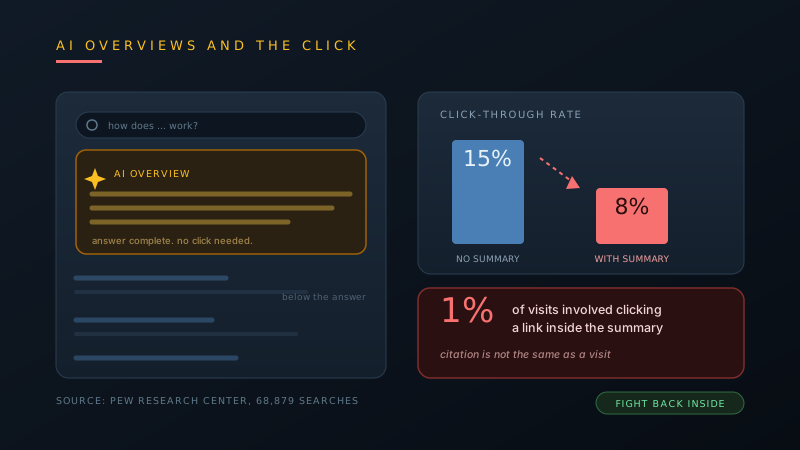
For two decades, search engine optimization meant one thing: earning a high position in a list of blue links and winning the click. That contract between publisher and search engine is now breaking. When someone asks ChatGPT, Perplexity, or Google's AI Overviews a question, they increasingly read a synthesized answer and never visit a website at all.
This shift has fractured SEO into two distinct disciplines that are often confused but technically separate: Answer Engine Optimization (AEO) and Generative Engine Optimization (GEO). They share DNA with traditional SEO, but they optimise for different machines, different outputs, and different definitions of success.
This guide maps the technical split between AEO and GEO: what each one actually targets, where they diverge under the hood, where they overlap, and how to build a single content operation that earns visibility across both. If your organic traffic has plateaued while your impressions keep climbing, this is why, and this is the framework to respond.
From Blue Links to Synthesized Answers: Why the Playbook Broke
The numbers behind the shift are stark. Gartner has forecast that traditional search engine volume will drop by around 25 percent by 2026 as users move to AI chatbots and virtual agents. Google's AI Overviews now surface a composed answer above the organic results for a growing share of informational queries. The ten blue links are not gone, but they are no longer the first thing most people read.
This breaks the economics that SEO was built on. Ranking first mattered because position drove clicks, and clicks drove revenue. When a generative engine reads ten sources, synthesises them into a single answer, and cites only three, the prize is no longer the click. The prize is being one of the sources the model trusts enough to quote. A page can now influence thousands of conversations without ever being visited.
That single change splits the optimisation problem in two. Some AI surfaces want a clean, extractable answer they can lift verbatim. Others want rich, citable source material they can weave into an original response. Optimising for the first is Answer Engine Optimization. Optimising for the second is Generative Engine Optimization. Treating them as one job is the most common mistake teams make in 2026.
Defining the Split: AEO vs GEO
What Is Answer Engine Optimization (AEO)?
Answer Engine Optimization is the practice of structuring content so that an answer engine can extract one direct, factual response to a specific question and present it as the answer. Answer engines are the systems that return a single definitive result: Google featured snippets and the People Also Ask box, voice assistants such as Siri and Alexa, and the fact-lookup layer inside AI assistants that fetches a discrete piece of information.
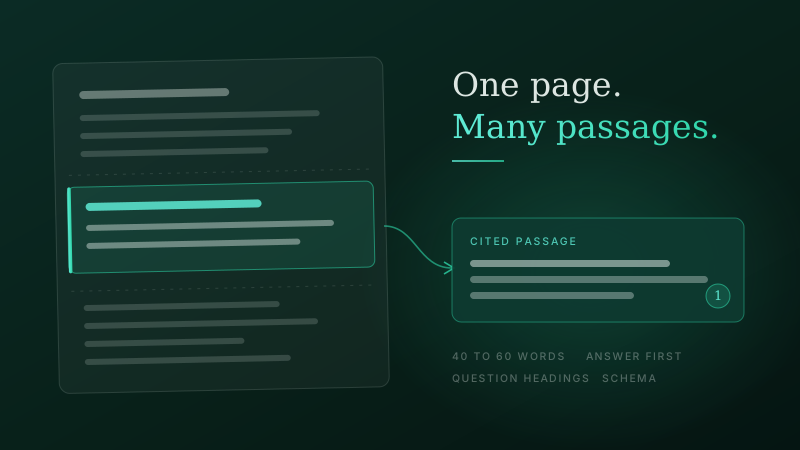
AEO is fundamentally about extraction. The engine is not writing prose; it is locating the best existing sentence or table and surfacing it. That means the technical work centres on machine-readable structure: schema.org markup such as FAQPage and HowTo, concise question-and-answer formatting, headings that mirror real queries, and answers placed in the first forty to sixty words of a section so they sit in the extractable zone.
What Is Generative Engine Optimization (GEO)?
Generative Engine Optimization, a term introduced in a 2023 Princeton research paper, is the practice of optimising content so that large language model powered generative engines cite, quote, or synthesise your material into the responses they compose. The targets are ChatGPT, Perplexity, Claude, and Google's AI Overviews and Gemini, the surfaces that generate an original paragraph rather than return an existing one. For a deeper comparison, see our breakdown of GEO versus SEO.
GEO is about inclusion in a synthesis, not extraction of a snippet. The engine reads many sources and writes something new, deciding along the way which sources are authoritative enough to draw from and name. The Princeton study found that tactics such as adding credible statistics, quoting named experts, and citing primary sources could lift a source's visibility in generated answers by up to 40 percent. That is a fundamentally different target from winning a snippet box.
The Technical Split: Where AEO and GEO Diverge
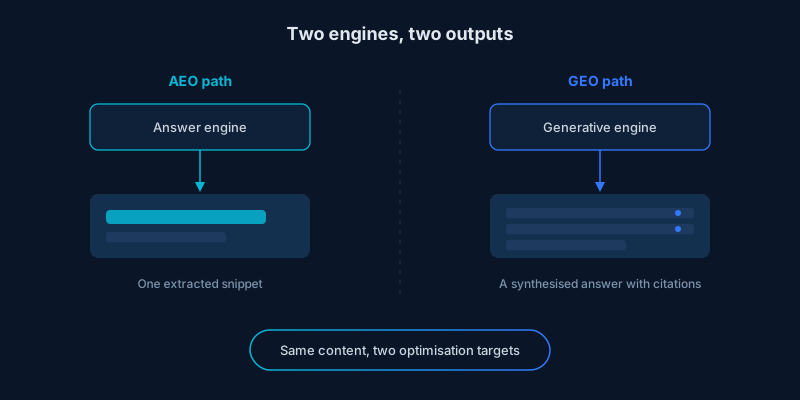
AEO and GEO share a parent in traditional SEO, but under the hood they optimise for different machines and different outputs. The table below maps where they diverge.
| Dimension | AEO | GEO |
|---|---|---|
| Target engine | Featured snippets, voice, People Also Ask | ChatGPT, Perplexity, Claude, AI Overviews |
| Output | One extracted answer, verbatim | A newly generated, cited synthesis |
| Optimisation unit | The sentence or table | The source and its credibility |
| Primary signals | Schema, Q and A structure, concision | Statistics, expert quotes, primary sources |
| Success metric | Snippet ownership | Citation share in answers |
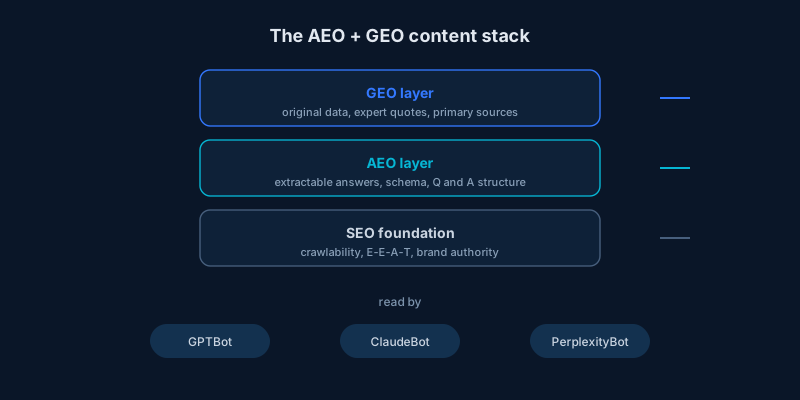
The practical implication is that a single piece of content needs two layers. A crisp, extractable answer near the top satisfies the answer engines. Depth, original data, expert quotes, and clear sourcing further down satisfy the generative engines. Neither layer alone covers both surfaces.
Where They Overlap: The Shared Foundation
For all their differences, AEO and GEO rest on a shared foundation, and that foundation is still recognisably SEO. Both depend on your content being crawlable in the first place. The AI crawlers, including OpenAI's GPTBot, Anthropic's ClaudeBot, and PerplexityBot, must be able to reach and render your pages, which makes robots.txt configuration, server-side rendering, and an emerging standard like llms.txt newly important.
Both also reward the same underlying credibility signals: demonstrable experience and expertise, factual accuracy, structured and well-organised content, and a recognised brand. Google's own guidance on helpful content still points back to its E-E-A-T principles. An engine that cannot verify who you are and why you are trustworthy will not quote you, whether it is extracting a snippet or composing a paragraph.
Building Your AEO and GEO Stack: A Practical Framework
You do not need two content teams. You need one content operation that builds both layers deliberately. The following framework works for most UK businesses starting from a traditional SEO base.
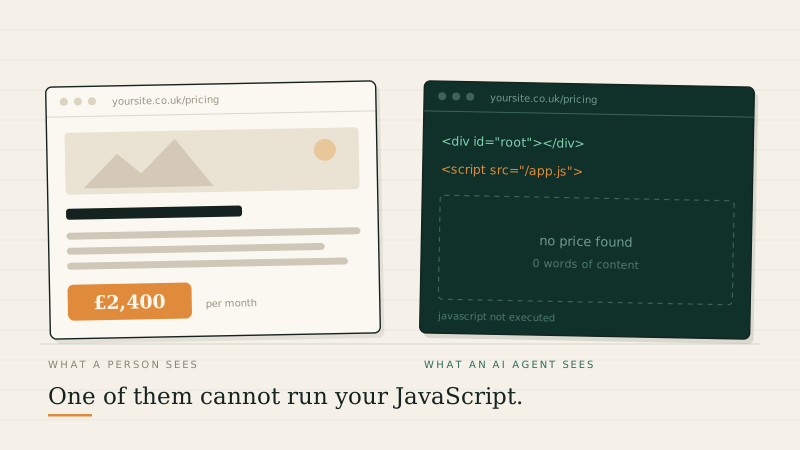
- Audit AI accessibility. Confirm GPTBot, ClaudeBot, and PerplexityBot are allowed in robots.txt and that key pages render without client-side JavaScript. If crawlers cannot read you, nothing else matters.
- Lead every section with an extractable answer. Place a 40 to 60 word direct answer immediately under each question-style heading, then expand. This serves AEO and gives generative engines a clean claim to quote.
- Add original, citable substance. Include proprietary data, named expert quotes, and links to primary sources. These are the GEO signals shown to increase citation rates.
- Mark up structure with schema. Apply FAQPage, HowTo, Article, and Organization schema so answer engines can parse your content unambiguously.
- Build entity authority. Describe your brand, people, and expertise consistently across your site and the wider web so models associate your name with your topic.
- Measure citations, not just clicks. Track when and where AI engines mention or cite you, and treat that as a first-class metric.
Done together, these steps mean one well-built page can win a featured snippet, get quoted by Perplexity, and appear in a Google AI Overview at the same time.
Measuring Success in a Post-Click World
The hardest adjustment is not technical; it is how you define a win. Click-through rate and ranking position were clean, countable metrics. In an answer-first world, much of your influence happens without a visit. A user can read your statistic inside an AI Overview, trust your brand, and arrive at your site days later through a direct search.
New metrics matter now: citation share (how often AI engines cite you for your priority topics), AI referral traffic (visits from ChatGPT, Perplexity, and Gemini, increasingly visible in analytics), and share of voice in generated answers (whether your brand appears when buyers ask about your category). These are early and imperfect, but they describe reality better than rank tracking alone.
Conclusion
The split between AEO and GEO is not a passing trend; it is the structural consequence of search moving from retrieval to synthesis. AEO wins the extractable answer. GEO wins inclusion in the generated narrative. Traditional SEO remains the foundation that makes both possible. The organisations that thrive will stop optimising for a single blue link and start engineering content that machines can both extract and trust.
At AI Native Agency we help UK businesses rebuild their discovery strategy for AI search, from technical crawler readiness to AEO and GEO content systems. To go deeper, read our guide to generative engine optimisation for UK businesses, and our practical look at putting large language models to work inside your business.
Frequently Asked Questions
- What is the difference between AEO and GEO?
- AEO (Answer Engine Optimization) structures content so an answer engine can extract one direct, factual response and present it as the answer, for example in a featured snippet or voice result. GEO (Generative Engine Optimization) optimises content so large language model powered engines such as ChatGPT, Perplexity, and Google AI Overviews cite or weave your content into a response they generate. AEO is about being extracted; GEO is about being included in a synthesis.
- Is GEO replacing traditional SEO?
- No. GEO and AEO sit on top of traditional SEO rather than replacing it. Generative and answer engines still need to crawl, render, and trust your pages, so technical SEO, structured content, and E-E-A-T credibility remain essential. What changes is the goal: instead of only ranking to win clicks, you also optimise to be the source an AI engine extracts or cites.
- What is an answer engine?
- An answer engine is any system that returns a single definitive response to a question rather than a list of links. Examples include Google featured snippets and the People Also Ask box, voice assistants such as Siri and Alexa, and the fact-lookup layer inside AI assistants. Answer engines extract an existing sentence or table rather than generating new prose.
- How do I optimise content for AI Overviews and ChatGPT?
- Lead each key section with a concise 40 to 60 word direct answer, then add original data, named expert quotes, and links to primary sources. Make your pages crawlable by AI bots, apply schema markup such as FAQPage and Article, and build consistent brand and entity authority. This combination serves answer engines and generative engines at the same time.
- How do you measure success in AEO and GEO?
- Because much of the influence happens without a click, the key metrics are citation share (how often AI engines cite you for your priority topics), AI referral traffic (visits from ChatGPT, Perplexity, and Gemini), and share of voice in generated answers (whether your brand appears when buyers ask about your category). These complement, rather than replace, traditional rank and traffic tracking.
- Do I need separate teams for AEO and GEO?
- No. Most organisations run a single content operation that builds both layers deliberately: an extractable answer near the top of each section for AEO, and original, citable depth further down for GEO, all on a sound technical SEO foundation. One well-structured page can win a snippet, get quoted by Perplexity, and appear in a Google AI Overview simultaneously.